In professional laboratory environments, GL45 media bottles are the industry standard for media preparation, storage, and sterilization. However, even the highest-quality USP/EP Type I borosilicate 3.3 glass can fail if handled incorrectly during autoclaving. Whether you are in pharmaceutical R&D or clinical diagnostics, following rigorous sterilization protocols for GL45 media bottles is the only way to ensure both safety and experimental integrity. This guide details how to master your sterilization workflow while protecting your equipment.
1. The Golden Rule: Pressure Management for GL45 Media Bottles
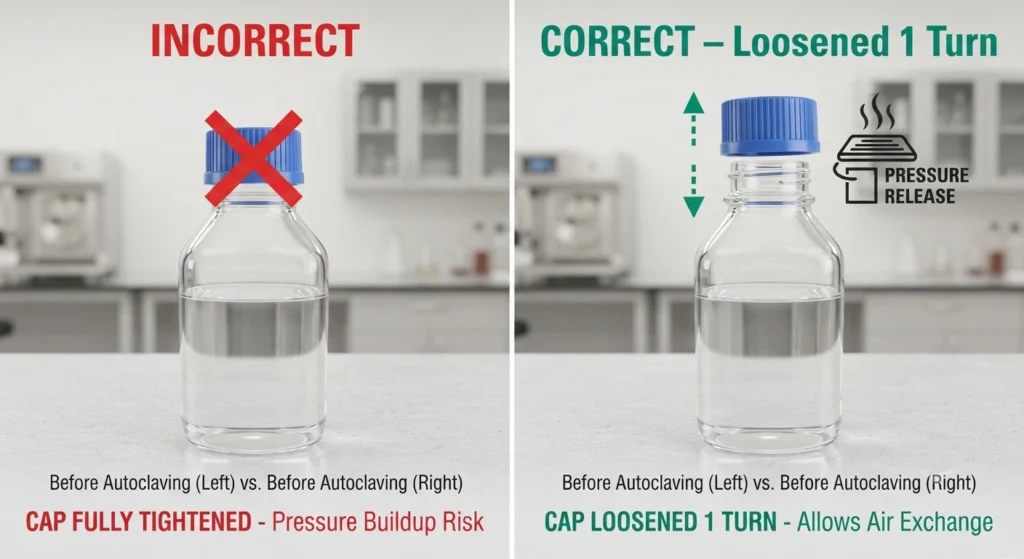
The most common cause of bottle failure during sterilization is internal pressure buildup. When an autoclave undergoes rapid cooling, a vacuum can form inside a sealed bottle. If the cap is tightened completely, this pressure differential can cause the glass to implode or crack.
- Best Practice: Always loosen the cap at least one full turn before autoclaving. This allows air to escape and pressure to equalize during the heating and cooling cycles.
- Pro Tip: For high-volume labs, consider using vented cap systems with hydrophobic PTFE membranes, which allow pressure equalization while maintaining a sterile barrier.
2. Preventing Thermal Shock
Thermal shock is the rapid change in temperature that compromises the glass structure. While borosilicate 3.3 glass has a very low coefficient of thermal expansion, it is not invincible.
- Avoid Direct Contact: Never place bottles directly on the heating elements or cold metal surfaces of the autoclave.
- Gradual Cooling: Allow the autoclave to reach room pressure and temperature naturally before opening the door.
3. Minimizing Contamination Risks
Sterilization is ineffective if the post-sterilization handling reintroduces contaminants.
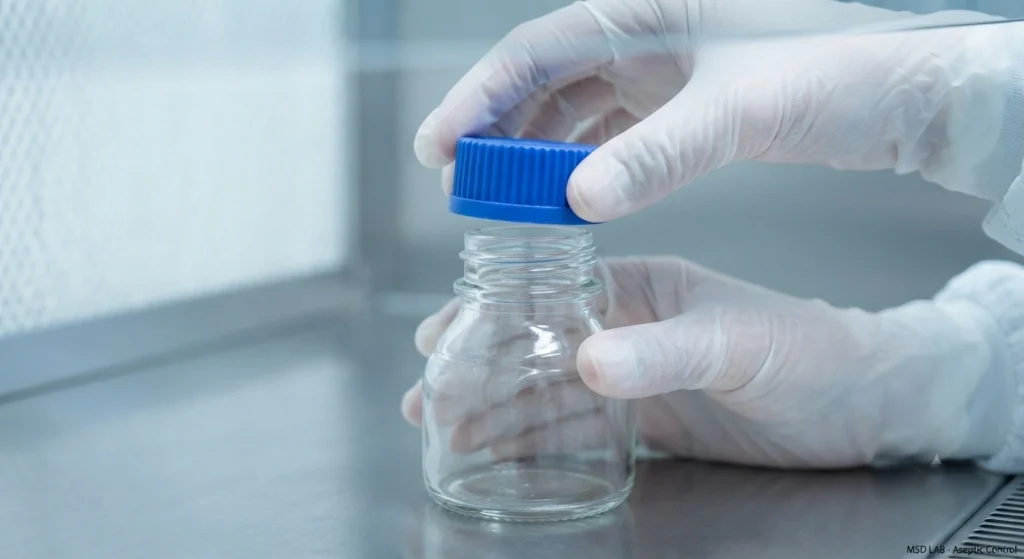
- The Re-tightening Protocol: Only tighten the cap once the bottle has cooled to a safe handling temperature in a cleanroom or laminar flow hood environment.
- Handling Hygiene: Always handle bottles by the body, never by the cap. Use aseptic techniques to ensure the bottle neck and cap liner remain pristine.
4. Why Material Standards Matter (Compliance)
For audit-ready labs, the bottle itself is as important as the process. Always ensure your GL45 media bottles are manufactured from high-purity USP/EP Type I borosilicate glass. Low-quality glass can leach alkali ions into your media. Look for the Retrace Code—a feature that allows you to download a Certificate of Conformity for each specific manufacturing batch, ensuring your compliance with international standards.