In the demanding worlds of pharmaceutical packaging and laboratory research, the choice of glass is not merely a matter of clarity—it is a matter of safety, stability, and chemical integrity. Among the various types of glass available today, High Borosilicate Glass 3.3 stands as the undisputed “Gold Standard” for high-performance applications.
1.What Defines Borosilicate Glass 3.3? 🔬
High Borosilicate 3.3 glass is a specialized type of glass where silica and boron trioxide are the main glass-forming constituents. The “3.3” refers to its coefficient of linear thermal expansion.
Key Technical Attributes:
- Superior Thermal Resistance: It can withstand rapid temperature changes (thermal shock) without cracking.
- High Chemical Inertness: It remains stable even when exposed to aggressive acids or alkaline solutions, preventing ion leaching.
- Exceptional Clarity: Provides 92% light transmission, essential for visual quality control in labs and pharmacies.
2.Critical Applications in Global Industries 🌍
International procurement standards like USP <660> and EP 3.2.1 frequently mandate the use of Type I glass (Borosilicate) for sensitive applications.
A. Pharmaceutical Primary Packaging 💊
For injectables and biologics, 3.3 glass ensures that the container does not react with the medicine.
- Products: Vials, ampoules, and pre-filled syringes.
- Benefit: Zero delamination risk and extended shelf life for life-saving drugs.
B. Laboratory & Scientific Glassware 🧪
In environments where boiling, freezing, and chemical reactions occur simultaneously, 3.3 glass is non-negotiable.
- Products: Beakers, flasks, and Soxhlet extractors.
- Benefit: High hydrolytic resistance ensures that the glass does not contaminate experimental results.
3. Why International Buyers Prefer MSD Borosilicate 3.3 🛡️
When sourcing from Tianjin Mingshangde (MSD), international clients benefit from a rigorous quality ecosystem:
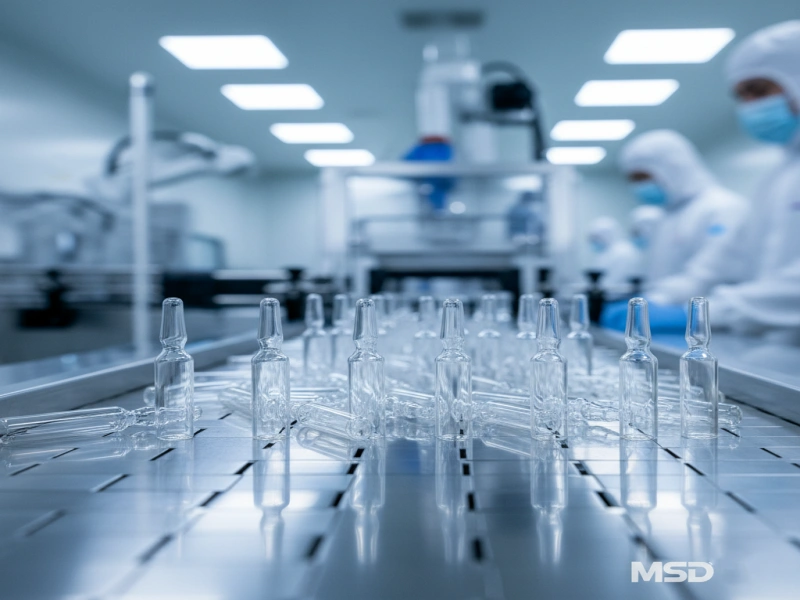
- Strict Dimensional Control: Using automated precision-drawing technology to ensure exact neck and wall thickness for high-speed filling lines.
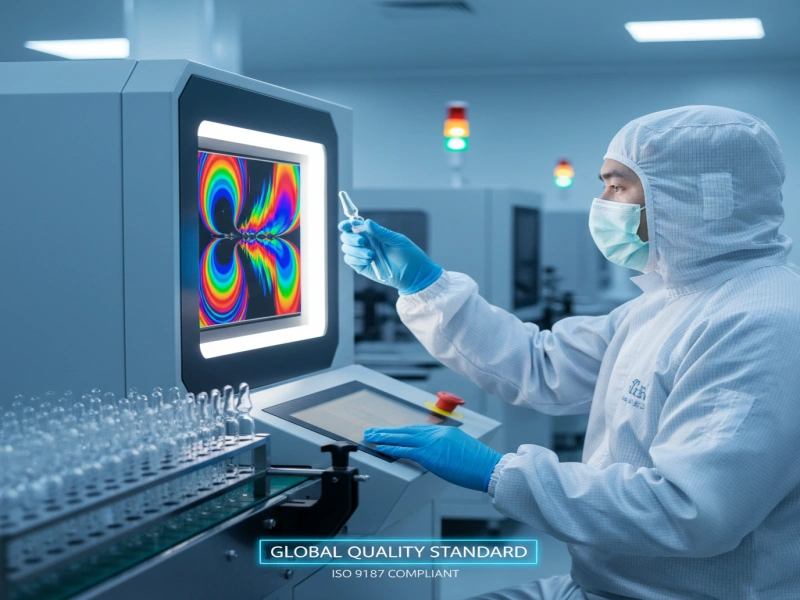
- Compliance-First Manufacturing: Every batch is tested for hydrolytic resistance to meet international pharmaceutical standards.
- Low Thermal Expansion: Perfectly suited for the flame-sealing processes used in ampoule production.
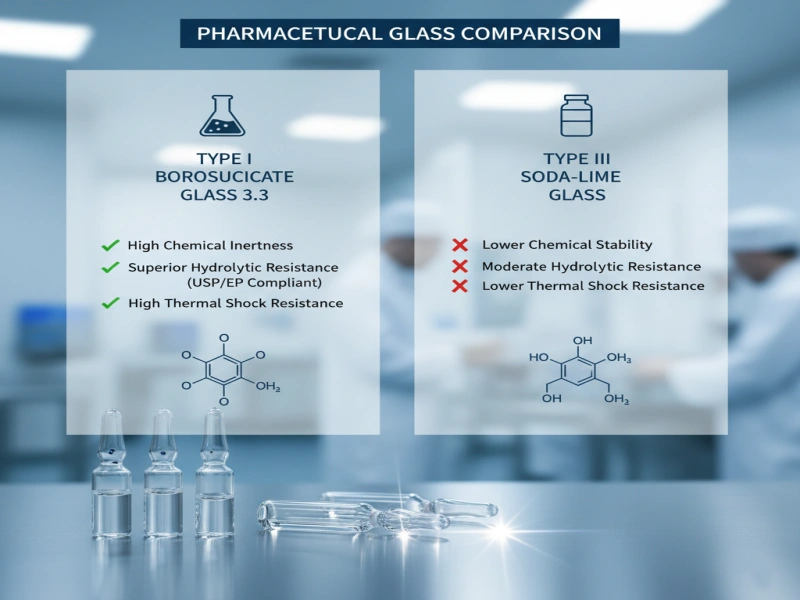
4. Technical Comparison: Type I vs. Type III Glass 📊
Understanding the difference is vital for cost-efficiency and safety:
| Property | High Borosilicate 3.3 (Type I) | Soda-Lime Glass (Type III) |
| Thermal Shock Resistance | Excellent (High) | Moderate (Lower) |
| Chemical Inertness | Superior (High) | Moderate |
| USP/EP Compliance | Gold Standard | Limited |
| Ideal Usage | Injectables / Labware | Oral Liquids / Cosmetics |
Conclusion: Future-Proofing Your Supply Chain 🤝
As global regulations for pharmaceutical safety tighten, switching to High Borosilicate Glass 3.3 is no longer an option—it is a requirement for excellence. By choosing the right material, you ensure patient safety and operational reliability.
Looking for high-purity glass solutions? [Contact our Technical Sales Team] | [Request a 3.3 Glass Data Sheet]