
In a busy laboratory or pharmaceutical production environment, the GL45 Laboratory Bottle is a workhorse. However, even the most robust 3.3 Borosilicate Glass can fail if handled incorrectly. Are you accidentally shortening the lifespan of your glassware?
In this guide, we dive into the common pitfalls—and the professional habits—that will keep your glass safe, sterile, and long-lasting.
1. The Trap of Over-Tightening the Cap 🚫
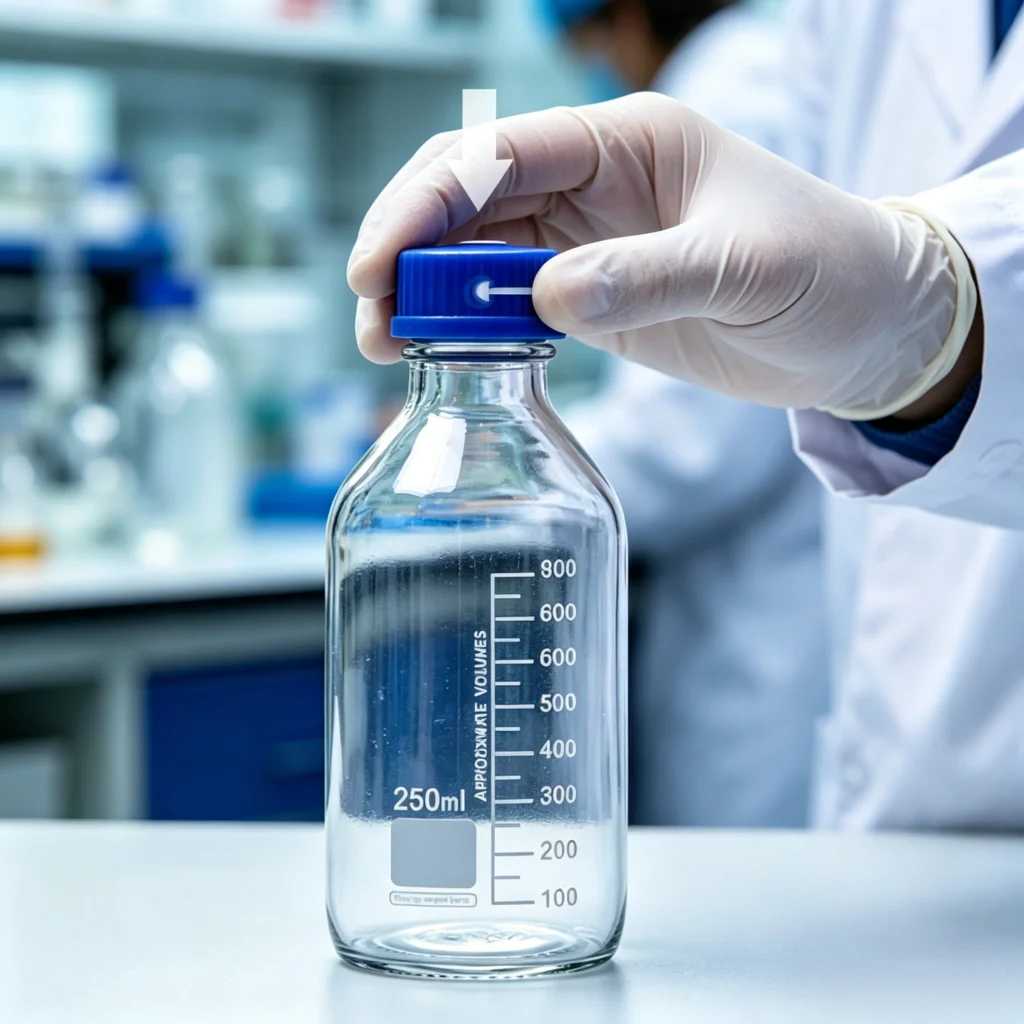
It is a common misconception that “tighter equals safer.” In reality, over-tightening the blue polypropylene (PP) cap creates unnecessary mechanical stress on the glass threads and the seal.
The Risk: During autoclaving, the air inside the bottle expands. If the cap is too tight, the pressure can cause the bottle to crack or the threads to strip.
The Professional Habit: Always loosen the cap by at least half a turn before placing the bottle in an autoclave. This allows for proper pressure equalization.
2. Thermal Shock: The Silent Killer ❄️🔥
While our 3.3 Borosilicate glass has high thermal resistance, it is not invincible against extreme, instant temperature changes.
The Pitfall: Moving a cold bottle directly from a refrigerator onto a hot plate, or pouring boiling liquid into a freezing cold bottle.
The Solution: Always allow your glass to acclimate to room temperature. Gradual heating and cooling are the keys to preventing micro-fractures that eventually lead to complete failure.
3. Cleaning Habits That Matter 🧼
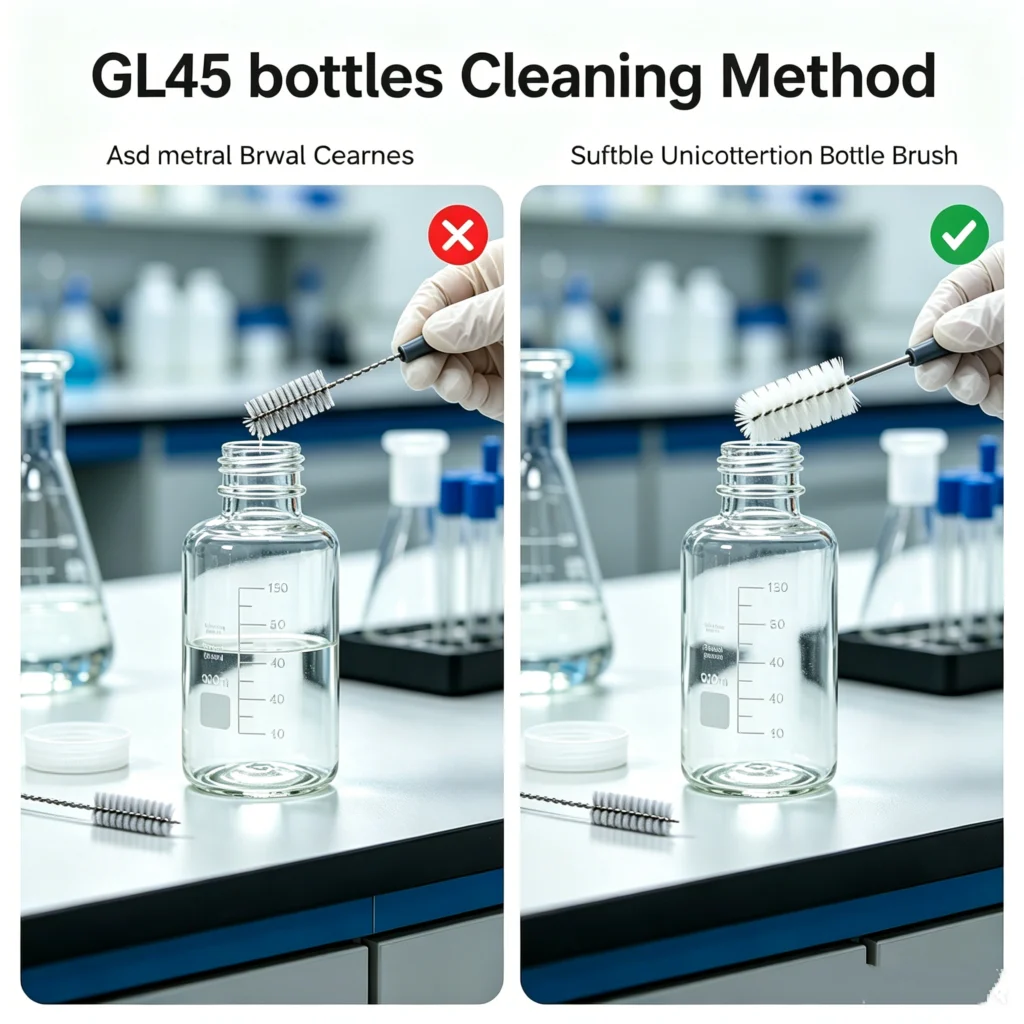
Using abrasive brushes or harsh metal scrubbers is a frequent mistake.
Why it Matters: Even tiny scratches on the inner surface of the bottle become stress concentration points. Over time, these scratches weaken the structural integrity of the entire bottle.
Pro-Tip: Use soft nylon brushes or, better yet, ultrasonic cleaning baths to maintain the pristine interior surface of your GL45 bottles.
4. Integrity of the Pouring Ring 💧
The detachable blue pouring ring is not just an accessory; it is critical for safety.
The Benefit: It prevents drips and contamination, keeping the exterior of the bottle clean and your work surface safe.
Check Regularly: Ensure the ring is securely in place before pouring. If it shows signs of melting, warping, or chemical degradation, replace it immediately to maintain a perfect seal.
Conclusion: Invest in Longevity 🤝
Proper care for your GL45 bottles not only saves money by reducing replacement frequency but also ensures the highest level of safety for your samples and your team. Remember: a little bit of care goes a long way in laboratory maintenance!
Need high-quality, durable GL45 replacements? [Browse our MSD Lab Glassware Collection] | [Contact us for Bulk Pricing]