
Professional laboratories require certified glassware for daily scientific workflows. When purchasers evaluate laboratory glassware, understanding the ISO 4796-1 standard builds strong brand trust and verifies product quality. This international specification governs laboratory bottles and guarantees reliable performance across global research facilities.
1. Defining the ISO 4796-1 Standard
Global regulations ensure consistent manufacturing across borders. The ISO 4796-1 standard defines technical requirements for screw-neck laboratory bottles. Certified manufacturers utilize high-purity borosilicate 3.3 glass to meet these strict global guidelines. Strict dimensional tolerances govern every production batch. Engineers measure thread dimensions, wall thickness, and base uniformity precisely. These parameters prevent structural weaknesses during daily handling. Standardized threads allow universal cap compatibility everywhere. Laboratories benefit from interchangeable components across different brands. Global compatibility streamlines supply chain management significantly. Quality control teams verify each batch against master templates. Independent auditors review factory testing records regularly. Compliance proves a manufacturer dedication to excellence.
2. Material Specifications and Purity Requirements
Raw material selection dictates final product durability. The ISO 4796-1 standard mandates specific chemical composition limits. Borosilicate 3.3 glass provides exceptional resistance to thermal shock. Laboratories expose vessels to rapid temperature shifts constantly. High-purity glass prevents cracking during extreme heating cycles. Chemical inertness protects sensitive reagents from contamination. Alkali leaching remains near zero in certified vessels. Acidic and basic solutions store safely for extended periods. Optical clarity lets technicians inspect contents easily. Transparent walls reveal particulate matter instantly. Surface smoothness prevents residue buildup during washing cycles. Automated cleaning equipment sanitizes bottles efficiently without surface degradation.
3. Thermal Performance and Autoclave Safety
Sterilization represents a core requirement in modern research. The ISO 4796-1 standard requires robust thermal endurance. Certified bottles withstand high-temperature sterilization up to 140°C easily. High-pressure steam environments test container structural limits daily. Proper wall distribution prevents localized stress concentrations. Technicians load media bottles into autoclaves with confidence. Thermal expansion coefficients remain extremely low for borosilicate glass. Sudden cooling phases do not fracture compliant vessels. Safety protocols improve dramatically when equipment meets international benchmarks. Facilities reduce accident rates through certified glassware deployment. Maintenance staff observe fewer container failures over time.
4. Mechanical Strength and Impact Resistance
Daily laboratory operations involve frequent handling and transport. The ISO 4796-1 standard addresses physical durability requirements. Impact resistance protects personnel from unexpected breakage risks. Reinforced rims resist chipping during liquid pouring tasks. Uniform sidewall thickness distributes mechanical loads evenly. Dropping minor items causes fewer catastrophic failures. Laboratory managers appreciate lower replacement frequency metrics. Cost efficiency improves through extended product lifecycles. Ergonomic design features enhance grip security for users. Wet hands slip less on standardized textured surfaces. Transport crates protect shipments during international transit effectively.
5. Capacity Tolerances and Graduation Markings
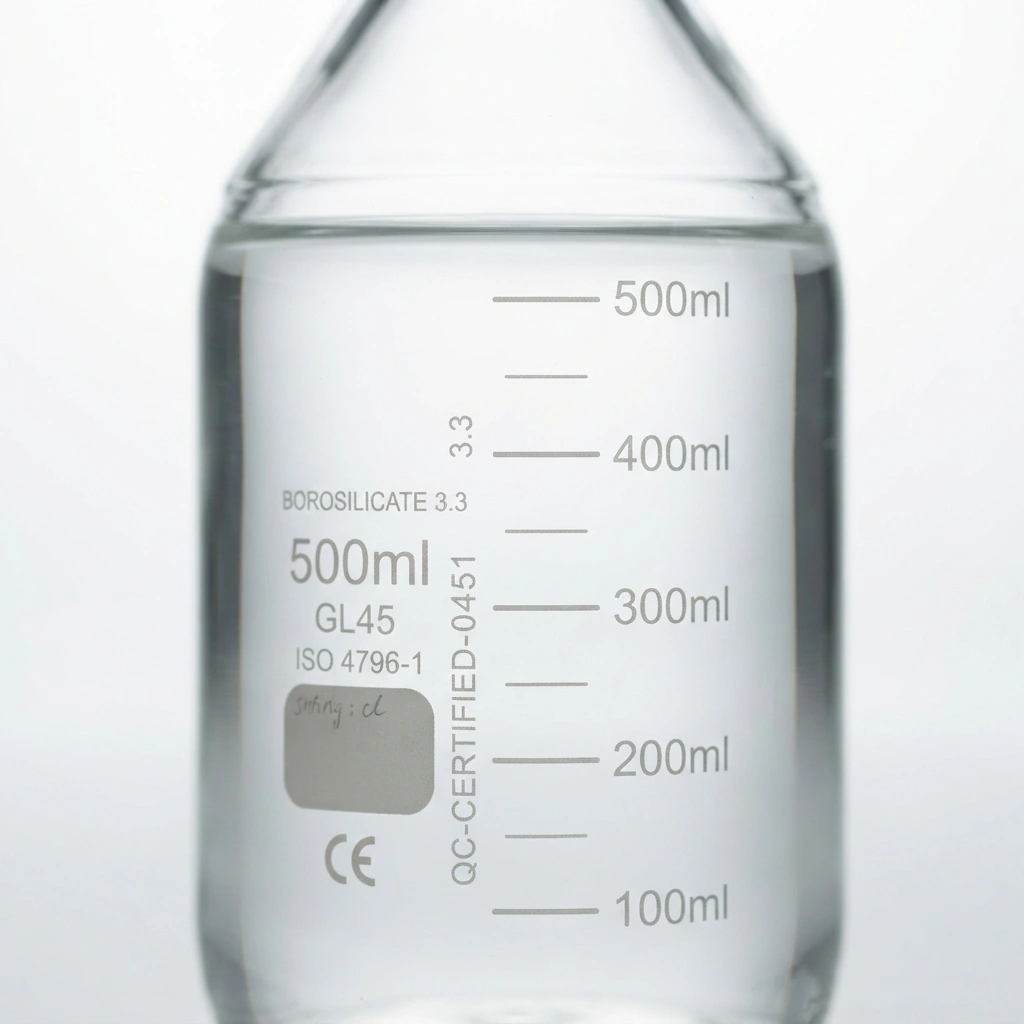
Volume measurement accuracy drives experimental reproducibility. The ISO 4796-1 standard dictates strict graduation precision. Permanent enamel markings resist chemical erosion from solvents. White or blue contrast scales display clear measurements. Technicians read fluid levels quickly without eye strain. Volumetric tolerances remain within tight percentage bounds. Calibration marks match actual contained liquid volumes precisely. Quality assurance protocols demand dependable volumetric indicators. Researchers rely on exact solution concentrations every single day. Incorrect dilutions ruin costly biological assays rapidly. Compliant bottles eliminate measurement uncertainty completely.
6. Caps, Pouring Rings, and Closure Systems
Complete closure systems ensure absolute leak-proof storage. The ISO 4796-1 standard evaluates cap and ring performance. Polypropylene screw caps withstand repeated autoclave sterilization cycles. Integrated sealing lips eliminate traditional liner requirements. Drip-free pouring rings prevent liquid runs down sidewalls. Reagent loss drops to absolute minimum levels. Contamination risks decrease during media transfer procedures. Thread engagement feels smooth and secure for users. Ergonomic cap ridges facilitate easy manual opening. Color-coded options help organize complex reagent inventories. Standardization benefits every laboratory technician worldwide.
7. Building Brand Trust Through Global Compliance
Market reputation depends on uncompromised product quality. Adhering to the ISO 4796-1 standard proves superior manufacturing capability. B2B buyers demand documented proof of international compliance. Distributors prefer sourcing products with recognized global certifications. Brand trust grows when performance matches technical claims. End users report higher satisfaction rates with certified glassware. Procurement specialists make confident purchasing decisions quickly. Regulatory audits pass smoothly with proper compliance documentation. Factory transparency strengthens long-term commercial partnerships. Market share expands through proven reliability and safety.

8. Procurement Strategies for Laboratory Managers
Smart purchasing decisions protect institutional budgets effectively. Evaluating suppliers against the ISO 4796-1 standard prevents costly mistakes. Low-quality alternatives often fail during critical research phases. True cost calculations include replacement frequency and safety incidents. Investing in certified glassware saves money over time. Bulk ordering secures favorable pricing structures for facilities. Reliable delivery schedules keep research pipelines running smoothly. Technical support teams assist with custom specification requests. Clear warranty terms provide additional peace of mind. Partnering with certified manufacturers secures long-term success.
Conclusion: Securing Excellence in Scientific Glassware
Scientific progress relies on uncompromising equipment standards. The ISO 4796-1 standard remains the benchmark for quality. Laboratories achieve better results using certified containment vessels. Brand loyalty follows proven product performance consistently.
Ready to upgrade your laboratory supply chain today? Contact our technical team at MSD to request certified product catalogs and bulk pricing details.