
Professional laboratories require reliable containment vessels for daily scientific workflows. When purchasing glassware, laboratory managers must know how to identify quality in GL45 media bottles. Evaluating manufacturing standards ensures safety, durability, and accurate experimental results across research facilities.
1. Evaluating Glass Wall Thickness for Quality GL45 Media Bottles
Consistent wall distribution dictates overall container strength. Premium manufacturers enforce strict dimensional tolerances during production. Uneven walls create localized stress points during heating cycles. Technicians inspect sidewalls carefully to spot structural defects. Uniform thickness prevents unexpected breakage under high pressure. High-grade glass withstands heavy daily handling easily. Laboratories protect staff by purchasing uniform containers. Quality control teams measure glass density across multiple production batches. Reliable suppliers maintain exact specifications for every single item. Structural integrity remains vital for long-term laboratory success.
2. Assessing Stress Control and Annealing Perfection
Thermal treatment processes eliminate internal structural tensions effectively. Proper annealing prevents spontaneous shattering during temperature shifts. Inferior products retain hidden mechanical stresses from rapid cooling phases. Advanced factories utilize specialized ovens for complete stress relief. Technicians perform polariscope tests to detect hidden faults. Zero internal stress guarantees maximum thermal shock resistance. Research teams handle hot sterilized vessels with complete confidence. Certified glassware survives rigorous autoclave sterilization cycles without failure. Proper annealing standards separate premium brands from cheap alternatives. Safety protocols improve dramatically when equipment passes strict stress checks.
3. Examining Cap and Sealing Ring Materials
Closure components prevent liquid leaks and microbial contamination. High-quality GL45 media bottles feature durable polypropylene caps. Premium caps withstand repeated high-temperature sterilization up to 140°C. Integrated sealing rings eliminate traditional liner degradation issues. Drip-free pouring rings ensure clean liquid transfer tasks. Inferior plastics warp quickly under intense steam exposure. Warped caps compromise sterile seals during incubation periods. Procurement officers demand food-grade polymer certifications for all accessories. Smooth thread engagement provides secure manual closure for users. Reliable sealing mechanisms protect costly biological reagents from environmental exposure.

4. Analyzing Graduation Clarity and Enamel Durability
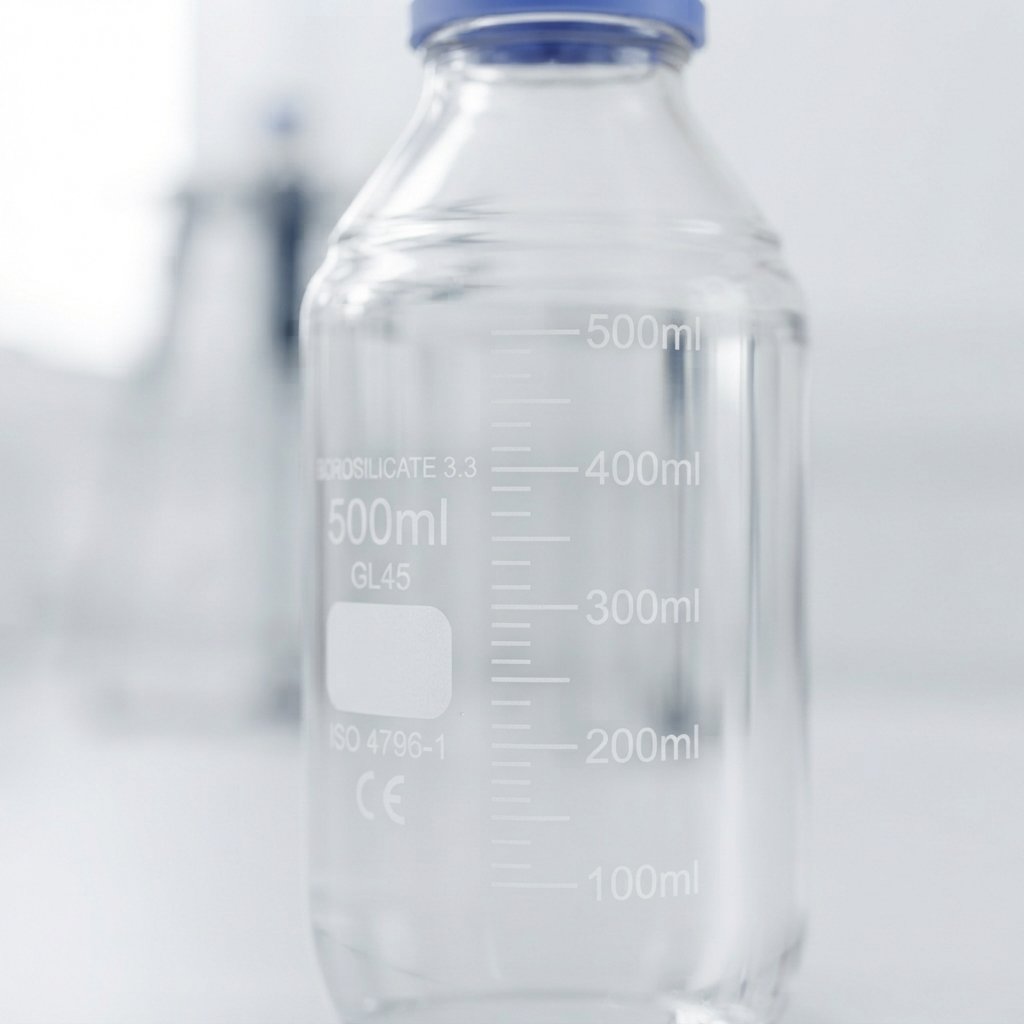
Volumetric accuracy drives successful chemical dilutions daily. Premium glassware features permanent white or blue enamel scales. Inferior printing erodes quickly after multiple chemical washes. Technicians rely on sharp graduation lines for exact measurements. Clear markings prevent costly reagent preparation errors in laboratories. High-contrast scales remain readable under bright lighting conditions. Enamel layers fuse permanently into the glass surface during firing. Resistant coatings prevent chemical corrosion from aggressive laboratory solvents. Quality inspectors check scale accuracy against international calibration standards. Exact volumetric readings ensure reproducible scientific research outcomes consistently.
5. Identifying Surface Purity and Chemical Resistance
Raw material composition determines ultimate chemical inertness. Top-tier containers utilize USP Type I borosilicate 3.3 glass. Pure glass prevents alkali leaching into sensitive storage solutions. Uncompromised chemical stability protects experimental baselines from contamination. Smooth interior surfaces prevent residue buildup during washing steps. Automated cleaning equipment sanitizes vessels efficiently without scratching. High optical transparency lets researchers inspect solution clarity instantly. Particulate matter becomes visible immediately through clear walls. Premium surface finishes resist aggressive acid and base attacks. Laboratories maintain strict purity standards using certified glass containers.
6. Sourcing Strategies for Procurement Managers
Smart purchasing decisions protect institutional budgets effectively. Evaluating suppliers against strict criteria prevents costly mistakes. Low-grade alternatives often fail during critical research phases. True cost calculations include replacement frequency and safety incidents. Investing in high-grade glassware saves money over time. Bulk ordering secures favorable pricing structures for research facilities. Reliable delivery schedules keep scientific pipelines running smoothly. Technical support teams assist with custom specification requests. Clear warranty terms provide additional peace of mind. Partnering with certified manufacturers secures long-term institutional success.
Conclusion: Securing Excellence in Laboratory Glassware
Scientific progress relies on uncompromising equipment standards. Knowing how to identify quality in GL45 media bottles remains essential for every facility. Laboratories achieve better results using premium containment vessels. Brand loyalty follows proven product performance consistently.
Ready to upgrade your laboratory supply chain today? Contact our technical team at MSD LAB to request certified product catalogs and bulk pricing details.